Storing Camera: The Complete Guide to Safe and Long-Term Camera Storage
Introduction to Camera Storage
A camera is more than just a device for taking photos; it is a delicate combination of electronics, optics, and mechanical components. Whether you own a beginner DSLR, a mirrorless camera, or professional photography gear, understanding the correct way of storing camera equipment is essential for maintaining performance and durability.
Many photographers focus on lenses, settings, and editing skills but ignore storage practices. Improper storage can silently damage a camera even when it is not being used. Moisture, dust, heat, and battery leakage are common causes of long-term damage. The good news is that safe camera storage does not require expensive equipment. With the right knowledge and simple habits, you can protect your investment for many years.
This detailed guide explains everything you need to know about storing camera gear safely, from environmental conditions to professional storage setups.
Why Proper Camera Storage Matters
Protecting Expensive Equipment
Modern cameras are precision instruments containing sensitive sensors, circuit boards, and optical glass elements. Even small environmental changes can affect their performance. Proper storage protects your equipment from unnecessary wear and prevents costly repairs.
Photography gear often represents a significant financial investment. Proper storage ensures that this investment remains functional and reliable over time.
Preventing Common Types of Damage
When cameras are stored incorrectly, several problems may occur:
- Moisture buildup leading to fungus inside lenses
- Dust entering the sensor area
- Corrosion of internal electronic parts
- Rubber seals becoming brittle due to heat
- Battery leakage damaging circuits
These issues often develop slowly, meaning users may not notice damage until it becomes serious.
Extending Camera Lifespan
Correctly storing camera equipment helps maintain image quality, autofocus accuracy, and overall reliability. A well-stored camera can function perfectly for many years longer than one exposed to poor environmental conditions.
Understanding Environmental Factors in Camera Storage
Environmental control is the most important part of storing camera gear safely.
Ideal Temperature for Camera Storage
Cameras perform best when stored at stable room temperature. Extreme heat can warp plastic components and weaken adhesives, while extreme cold may cause condensation when the camera returns to warmer conditions.
Recommended temperature range:
| Condition | Ideal Range |
|---|---|
| Storage temperature | 20°C – 30°C |
| Short-term tolerance | 10°C – 35°C |
| Dangerous extremes | Below 0°C or above 40°C |
Avoid leaving cameras inside cars or near windows exposed to sunlight.
Ideal Humidity Levels
Humidity is the biggest enemy when storing camera equipment. Excess moisture encourages fungal growth inside lenses, which permanently damages glass coatings.
Safe humidity level: 40–50% Relative Humidity (RH)
Low humidity prevents fungus, while extremely dry air can damage rubber components. Balance is key.
Dust and Air Pollution Effects
Dust particles may enter lenses or settle on sensors. Over time, dust affects image clarity and increases maintenance needs. Storing cameras in sealed or protected environments greatly reduces contamination.
Light Exposure and Sun Damage
Continuous sunlight exposure can fade rubber grips and heat internal components. Cameras should always be stored away from direct light sources.
Preparing Your Camera Before Storage
Proper preparation is essential before placing a camera into storage.
Cleaning the Camera Body
Before storing camera equipment, gently clean the body using a microfiber cloth. Removing oils, fingerprints, and dust prevents long-term surface damage.
Cleaning and Protecting Lenses
Lenses should be wiped carefully using lens-safe cleaning tools. Always attach front and rear caps to protect optical elements from scratches and dust.
Removing Batteries and Memory Cards
Leaving batteries inside unused cameras can lead to leakage. Removing batteries prevents corrosion and electrical damage. Memory cards should also be removed and stored safely to protect data.
Drying After Outdoor Use
If the camera was used in rain, humidity, or cold weather, allow it to dry completely before storage. Trapped moisture is one of the main causes of internal damage.
Best Camera Storage Methods
Different storage methods suit different needs depending on usage frequency.
Camera Bags and Padded Cases
Camera bags provide convenience and short-term protection. Their padded interiors protect against accidental bumps and dust exposure. However, bags alone may not control humidity effectively.
Airtight Containers
Airtight plastic containers are an affordable solution for storing camera gear at home. Adding silica gel packets helps absorb moisture inside the container.
Dry Boxes and Dry Cabinets
Dry cabinets are considered the best solution for long-term camera storage. These cabinets maintain controlled humidity automatically, preventing fungus growth.
Storage Comparison Table
| Storage Method | Cost | Protection Level | Best Use |
|---|---|---|---|
| Camera bag | Low | Medium | Daily storage |
| Plastic box + silica gel | Low | Good | Home storage |
| Dry box | Medium | Very Good | Long-term storage |
| Dry cabinet | High | Excellent | Professional use |
Storing Camera Lenses Properly
Lenses require special attention during storage because they contain multiple glass elements.
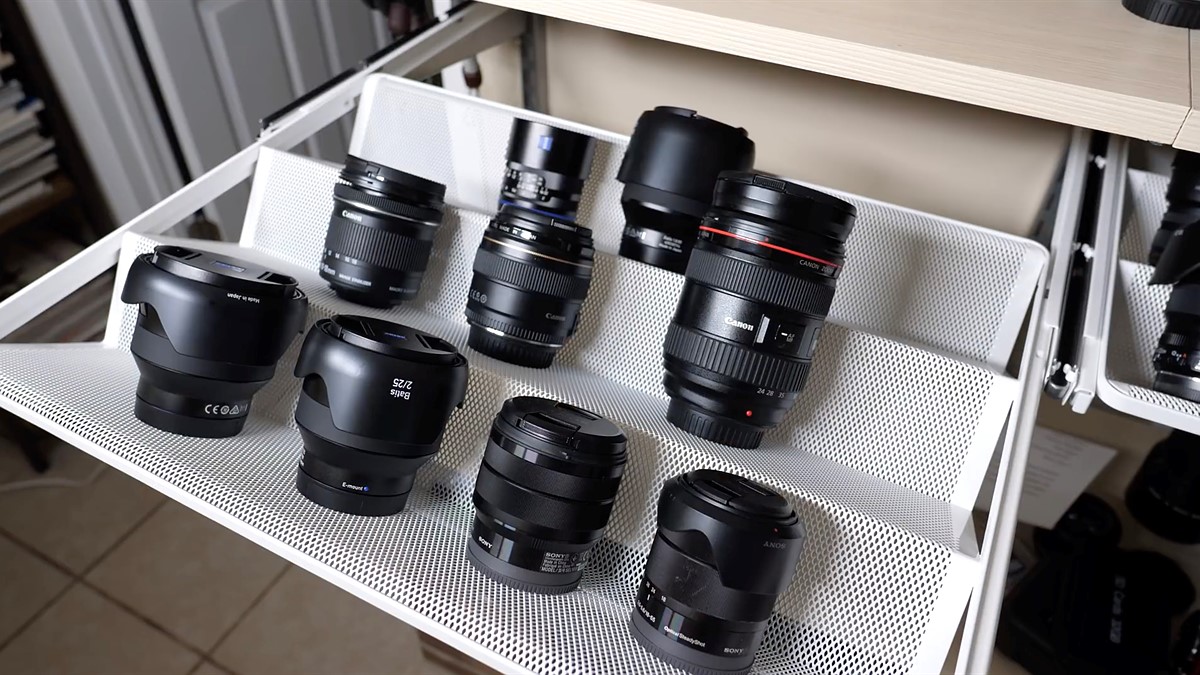
Store lenses vertically whenever possible. Vertical positioning reduces pressure on internal parts and prevents dust from settling unevenly. Always attach both caps and avoid stacking heavy items on lenses.
Keeping lenses dry is extremely important because fungus usually begins inside lens elements where cleaning is difficult.
Long-Term Camera Storage Guide
When storing camera gear for weeks or months, additional precautions help maintain functionality.
Cameras should be checked periodically even during storage. Turning the camera on occasionally keeps internal mechanisms active and prevents stiffness in moving components.
Batteries should be stored separately at about 40–60% charge instead of fully charged or completely empty. Accessories like cables, flashes, and chargers should also be organized to prevent tangling or damage.
Camera Storage in Different Environments
Humid Climates
In humid regions, silica gel packets or electronic dehumidifiers are highly recommended. Replace moisture absorbers regularly to maintain effectiveness.
Hot Regions
Air-conditioned rooms provide safer storage conditions. Avoid metal cabinets exposed to heat, as they can trap warm air.
Cold Environments
When moving cameras from cold to warm environments, allow gradual temperature adjustment to prevent condensation inside the camera.
Travel Storage
During travel, hard protective cases offer better protection against shocks and environmental exposure compared to soft bags.
Organizing Camera Gear Efficiently
Organized storage improves both protection and convenience. Creating a dedicated storage area ensures equipment remains safe and easy to access.
Good organization includes:
- Separate compartments for lenses and accessories
- Clearly labeled batteries and chargers
- Protective covers for rarely used gear
Photographers with multiple cameras benefit from shelving systems designed specifically for equipment storage.
Common Camera Storage Mistakes to Avoid
Many users unknowingly damage their gear through simple mistakes. These include storing cameras in bathrooms where humidity fluctuates, leaving batteries installed during long storage periods, or sealing cameras without moisture control.
Another common mistake is storing cameras immediately after outdoor use without allowing temperature stabilization.
Avoiding these errors significantly increases equipment lifespan.
Recommended Camera Storage Accessories
Several accessories make storing camera equipment safer and easier.
| Accessory | Purpose |
|---|---|
| Silica gel packs | Absorb moisture |
| Hygrometer | Measures humidity |
| Dry cabinet | Maintains ideal environment |
| Hard case | Shock protection |
| Dust covers | Prevent contamination |
These tools are especially helpful for photographers living in humid climates.
DSLR vs Mirrorless Camera Storage Tips
DSLR cameras have mirrors and mechanical systems that benefit from occasional activation during storage. Mirrorless cameras, while smaller, expose sensors more frequently during lens changes, making dust protection especially important.
Both types require similar humidity and temperature control, but mirrorless users should pay extra attention to sensor cleanliness.
Professional Camera Storage Setup
Professional photographers often create dedicated storage stations. These setups may include dry cabinets, labeled shelves, and maintenance schedules.
A professional storage area usually features:
- Controlled humidity environment
- Organized lens arrangement
- Backup batteries stored safely
- Regular inspection routines
Such setups reduce downtime and protect large equipment investments.
Maintenance Checklist for Stored Cameras
Regular maintenance ensures storage conditions remain effective.
Monthly inspection should include:
- Checking humidity levels
- Inspecting lenses for fungus
- Testing camera functionality
- Replacing silica gel if saturated
- Cleaning exterior surfaces
Consistent monitoring prevents small issues from becoming major problems.
Conclusion
Proper storing camera practices play a crucial role in maintaining performance, reliability, and image quality. Cameras are sensitive devices that require protection from humidity, dust, temperature extremes, and improper handling. By cleaning equipment before storage, controlling environmental conditions, removing batteries, and using suitable storage solutions, photographers can significantly extend the life of their gear.
Whether you are a beginner or a professional, adopting smart storage habits ensures your camera remains ready to capture perfect moments whenever needed.
FAQs
1. How long can a camera stay in storage without use?
A camera can remain stored for months if kept in a dry, temperature-controlled environment and checked periodically.
2. Is a dry cabinet necessary for storing camera gear?
It is not mandatory for beginners, but it is highly recommended in humid climates or for expensive equipment.
3. Should lenses be stored attached to the camera?
Yes, lenses can remain attached, but both lens caps should always be used to prevent dust and damage.